Monday, September 17, 2012

Local KC Metro Municipality may ban Cell phone use in cars

About 10 states have done the same thing...why not us.  That appears to be the thinking at the Mission city council meeting as new city legislation is under discussion.  The ban would stop individuals from using hand held cell phones while driving an automobile in Mission city limits.  The obvious reason is to help reduce traffic accidents related to cell phone use.  I am sure that this will face some strong opposition.

Here is the article in the Kansas City Star.

Mission mulls ban on hand-held cellphones while driving

Council faces backlash over its plan to be first in the area to outlaw using the device while driving.


Read more here: http://www.kansascity.com/2012/09/15/3817564/mission-considers-ban-on-hand.html#storylink=cpyYou’re driving down Shawnee Mission Parkway chatting on your cellphone. Suddenly, red lights are flashing in your rearview mirror.  You’ve just crossed the border into Mission.

That’s what the future could look like in Mission, a small Johnson County suburb that is talking seriously about doing what few cities have tried so far: banning use of hand-held cellphones while driving.  Nationwide, 10 states have banned talking on hand-held cellphones, although the bans have not been implemented in the Midwest. Every day new laws are being considered, and the U.S. Department of Transportation has begun a national campaign.  So Mission isn’t waiting.  “I think it is a lot bigger problem than people realized,” said Pat Quinn, a Mission city councilman. “I definitely think we could save some lives and property damage and injuries by making that illegal.”

A proposed ordinance would allow people to talk on hands-free cellphones only. If police see drivers holding phones within 8 inches or so of their heads, they could pull them over.  Currently the ordinance is before the finance and administration committee and will come up for discussion again, possibly in November.  City officials know that the ordinance is controversial — they were besieged by calls when it first came up last month.  “A couple of my friends told me I was walking into a hornet’s nest,” said Police Chief John Simmons, who introduced the measure to the council.  Mayor Laura McConwell said the council recognizes the safety issues involved — one council member lost a friend to a distracted driver. But she also recognizes that Mission is a small city in a metropolitan area. She said a workshop and public hearings might be needed, as well as conversations with other cities and the county before such an ordinance is passed.

“This is a pretty big culture shift, so it needs to have a much broader conversation before we move forward,” McConwell said.  Growing cell risk.  It seems that every day new laws are being considered as concerns grow about the “distracted driver” syndrome.  Distracted driving, officials say, includes anything that diverts the driver’s attention, such as using cellphones and smartphones, texting, eating and drinking, grooming and reading, including maps, using a navigation system or watching videos.  In fact, the name of the federal campaign’s website is distraction.gov.  But cellphones are usually the focus.

“Everybody has been impacted by someone on a cellphone,” said Leanna Depue, highway safety director for the Missouri Department of Transportation. “If you are not putting all your attention into that very complex task and very complex environment that is always changing, you do increase your risk of crashing.”  Driving and using a cellphone can reduce the amount of brain activity associated with driving by 37 percent, according to a study at Carnegie Mellon. Texting increases the crash risk 23 times, says a study of long-haul truckers by Virginia Tech Transportation Institute.  In 2010, 3,092 people were killed in crashes involving distracted drivers, according to the federal government, and an estimated 416,000 people were injured.

Little Apple
Ten states and the District of Columbia have banned handheld cellphones. In all, 39 ban texting while driving, including Kansas.  Missouri bans texting for drivers under 21. For the past two years the state legislature unsuccessfully has attempted to pass a law prohibiting distracted driving.  As for cities, fewer than 20 nationwide, including Detroit and Chicago, have tried to ban cellphones on their own, according to the American Automobile Association.  In Kansas, only Manhattan is known to have a cellphone law.  The home of Kansas State University banned using electronics while driving because so many of the 23,000 students seemed to be using them, creating safety concerns, said Brad Schoen, the Manhattan and Riley County Police Department director.  “I’ll tell you we write a ton of citations,” Schoen said.

Since January police have ticketed more than 700 drivers for talking on cellphones and texting, generating an estimated $100,000 in revenue. Another 1,000 drivers received warnings.  If you are seen holding a device close to your head, “there is a legal presumption you are using it illegally,” Schoen said. “The driver then has to prove he wasn’t using it illegally.” 

Mission law
The city of Mission, already known for its aggressive traffic enforcement, may become the first in the Kansas City area with a cellphone ordinance.  It would be “proactive,” Simmons said. Police already can cite a driver who is distracted and causes an accident. But the new ordinance means police would no longer have to wait for an accident to ticket you if they see you talking on the phone.  Police also could use the ordinance to conduct checkpoints — they could station an officer near a busy intersection to spot violators and then radio ahead to a waiting officer, as Manhattan does, Simmons said.  But passing the ordinance isn’t guaranteed — after Simmons first proposed the ordinance last month, complaints as well as praise came to him from all directions.

The concerns included:
•  Restricting liberties.
For example, the Kansas helmet law only applies to those under 18 because of arguments that it infringes on personal liberties, Quinn said. And he agrees. “That is a personal choice for a guy riding a motorcycle,” he said.  But he argues that the cellphone ban is different because it would protect the public from distracted drivers.
•  Making money for the city.
Questions rose about Mission’s reputation of being a speed trap. Was this just another way to raise revenue for the city?  “Citizens have a feeling in Mission in general that the police write way too many tickets,” Quinn said.  But Quinn said the new law would be about safety, not money. He and Simmons both said they hoped they would not have to ticket anyone if an education program and signs are effective.
“I would hope we would get the word out if we pass something like that, people would quit doing it when they drive through Mission,” Quinn said. “If you end up making some revenue that is just frosting on the cake, as they would say.”
•  Confusion over city borders.
In other words, people wouldn’t know when they are driving into Mission, which is surrounded by other suburbs and crossed by many streets.  That’s one reason some other suburbs are unlikely to consider such a law.
“If you have regulations on this from city to city, it is really tough for people,” said Scott Lambers, Leawood city administrator. “To be fair to the people, you would have to post (city limits) because it is such a rare violation. You would at least have to do this on a countywide basis, if not statewide.”
That hasn’t been a problem in Manhattan, police there said, because when you enter the city, you’re leaving a rural area.  But Mission Kansas officials said they plan to put up signs to let people know they’re in Mission and that there’s a cellphone ban.  Quinn, whose business is escorting funeral processions, said he thinks the effort is worthwhile.  “I’ve seen so many close calls due to cellphones,” he said. “It’s amazing how many times you yell at them to get off the phone, and they look at you like you are crazy.”

Read more here: http://www.kansascity.com/2012/09/15/3817564/mission-considers-ban-on-hand.html#storylink=cpy

Tuesday, September 11, 2012

KC Lawyer facing murder charges.

Saw this on KCTV5 last night.  A Kansas City Lawyer is now facing second degree murder charges after allegedly forging documents giving her durable power of attorney over her father's healthcare decisions and then using that document to deny her father heath care after he was shot several times.  It seemed like a really nice couple, I hope that if this is in fact true the court serves up some justice for these two.

Here is the article on KCTV5.

KCTV5

KC law firm owner charged in father's 2010 death

Posted: Sep 11, 2012 8:49 AM CDT Updated: Sep 11, 2012 8:59 AM CDT
KANSAS CITY, MO (KCTV) -
A Kansas City law firm owner has been arraigned in the deadly shooting of her father.  Susan Elizabeth Van Note, 44, is charged with killing her father, 67-year-old William Van Note, who died along with his longtime partner, Sharon Dickson.  Desre and Stacey Dory, of Shawnee, have also been indicted on second-degree murder and forgery counts.  Dickson died at the home in the Camden County town of Sunrise Beach.  William Van Note died four days later at a Boone County hospital.

Charles and Joyce Newcomer shared a quiet North Kansas City cul-de-sac for 16 years with William Van Note and his companion.  The couple lived in a home off Northwest 80th Terrace until about four years ago when they moved down to Sunrise Beach, MO.  Newcomer still remembers the day he heard about the attack that claimed their lives.  "It was quite startling.  Someone you knew and lived next to for so many years.  It was scary," he said.

The Newcomers were equally shocked when they heard Susan Van Note was arrested Friday and charged with his murder.  She pleaded not guilty to the charges in a Boone County courtroom Monday.  "My first reaction was, 'Oh my.'  I'm glad we raised our kids to be loving," Joyce Newcomer said.  Charging documents released Monday allege the Lee's Summit lawyer who practiced in Kansas City forged paperwork to gain durable power of attorney over healthcare matters of her father, a power prosecutors say she used to deny him life sustaining medical treatment in the days after he was shot several times.

William Van Note's neighbor in Sunrise Beach was not surprised to near the details released in the charging document.  "A lot of the people here figured she had something to do with it, and she hired someone to do it,"  George Wallace said.  No charges have been filed in the murder of Sharon Dickson.  The attorney for Susan Van Note entered a not-guilty plea on her behalf during a hearing Monday in Boone County.  A judge issued a $1 million bond for Susan Van Note.

Wednesday, September 5, 2012

KU ticket scandal inmate wants judge to toss out sentence.

Its been a year or more the University of Kansas ticket scandal ended but it turns out this thing just wont die.  A co-conspirator in the case that received a 46 month prison sentence has now submitted a motion alleging that his criminal defense lawyer at the time had actually caused him to spend longer in in prison and that he did not provide an adequate defense to the criminal charges.  Here is the article in the Kansas City Star..  Will update as new news comes out.


Ex-KU official wants judge to toss out sentence


Read more here: http://www.kansascity.com/2012/08/28/3782560/ex-ku-official-wants-judge-to.html#storylink=cpy

A former University of Kansas assistant athletics director wants a judge to throw out his sentence in a $2 million ticket scalping conspiracy, saying his lawyer did a poor job.Rodney Jones is serving a 46-month federal prison sentence in Oklahoma. He was among seven people snared in the investigation of unlawful sales of Jayhawk season tickets by key athletics officials.

Jones filed a motion Monday in federal court claiming his attorney prevented him from cooperating early with an internal university investigation. Two defendants who did cooperate received probation.  Jones also claims prosecutors did not honor an agreement to recommend leniency for his substantial assistance. He argues his attorney did not provide a vigorous defense, in an effort to avoid offending the prosecutor and jeopardizing the recommendation for leniency.

Read more here: http://www.kansascity.com/2012/08/28/3782560/ex-ku-official-wants-judge-to.html#storylink=cpy

Tuesday, September 4, 2012

DUI checkpoints across the KC Metro over Labor day. Whats the deal.

I saw this article on the Kansas City Kansas the other day and it provoked me to make a comment.  Here is the post.  I am a DUI lawyer in Kansas and I agree with most of this post. The protections provided for us by the fifth amendment to the US constitution provide protection for individuals not to self incriminate. I believe as do most defense lawyers that forcing someone to give evidence that incriminates them in a crime (i.e. forcing them to blow) is directly against the constitution. It shouldn't be long before this is brought up on appeal.

Now that being said, my understanding of the new law only makes if a criminal offense to refuse the breathalyzer after when a person refuses to submit to a to a test for the presence of alcohol and/or drugs and the person has a prior DUI diversion, conviction or suspension for a refusal which occurred when the person was 18 years of age or older.

COMMENTARY: DUI checkpoints invade rights, are an inefficient solution to the problem of drunk-driving

By NICK SLOAN, NJSloan212@gmail.com

Drunk-driving is a worthy problem to attack for law enforcement and society in general.  According to the Centers for Disease Control and Prevention, there were nearly 300,000 "incidents of drunk driving" each day in the United States during the 2010 calendar year. In total in 2010, there were over 112 million reported cases of drunk driving.

In Kansas, drunk driving will be a central focus during the Labor Day Weekend. DUI checkpoints (or sobriety checks) will be set up across the Kansas City metro.

The Sunflower State also had a new law passed in 2012 that makes it a crime for someone to refuse a breathalyzer test.

When it comes to solving the problem of enforcing the law, are checkpoints really the best option?

The answer if you look at the statistics is "no."

Checkpoints do not perform nearly as well as roving patrols - police units that keep an eye on the streets and highways with the idea of finding suspicious drivers.

  • A handful of studies have confirmed that checkpoints are not as efficient as simple roving patrols are. In 2009, officers in the great state of California stopped nearly 1.8 million drivers at DUI checkpoints. Just over 5,000 individuals were arrested, meaning there was a success rate of around .45 percent. That's not 45 percent - it's .45 percent. In the same state during the same calendar year, roving patrols had a 14.7 percent rate in finding drunk drivers, as over 5,800 drunk drivers were arrested after roving patrols checked out nearly 40,000 vehicles.
  • In 2007, the Commonwealth of Virginia had a .33 percent checkpoint success rate. When it came to the roving patrol units, there was an 8.1 percent success rate in 2007.
DUI checkpoints are not only an inefficient way to crackdown on drunks, but are unfair to the 98-99 percent of drivers out there who are not morons.

Why should the sober drivers have to submit to a breathalyzer test? Non-drinkers could be committing an illegal act simply because they don't want their rights trampled. Shouldn't the drunk driving law just be enforced without that little breathalyzer part?

The word "freedom" is greatly over-used in today's political world.

But it's not with DUI checkpoints. DUI checkpoints infringe on the non-drunks.

I respect and 100 percent agree with cracking down on drunk drivers. When I was three years old, I was involved in a car accident that was caused by a drunk driver.

Drunk drivers, especially repeating offenders, deserve strict punishment and there's no one who will carry the flag higher on that issue than me.

Checkpoints, however, are not the best way to go if the idea is to crack down on a larger percentage of them.

Isn't a better idea to assign police patrols to an area that's heavily populated with bars? Isn't it better for the rest of us if the police investigated and looked for suspicious drivers?

Driving in the late hours, you don't need a master's degree to spot a drunk driver, especially if you're in a one-lane road. If you see a driver swerve, stop suddenly or do anything else weird while driving, it's safe to say he or she is probably drunk.

Police would at least have a good reason to pull the driver over in that instance and not cause headaches for those who follow the law.

It's important to nab all of the drunk drivers out there.

However, the rights of the law-abiding drivers should be protected too.


Thursday, August 30, 2012

50 year old "petty crime" costs man his job!

This is exactly why you don't want a criminal record.  It keeps coming up time and time again, costing you a job, or preventing you from getting a job. Having a criminal record is embarrassing and it is the type of thing that just stays with you for your whole life.  If you have been charged with a crime or need a crime expunged from your record please contact an experienced criminal defense attorney.  Don't be like this poor gentleman.

A 'nickel-and-dime' crime almost 50 years ago gets 68-year-old employee fired

By Ed Payne, CNN
updated 5:31 AM EDT, Thu Aug 30, 2012

(CNN) -- Sometimes life can turn on a dime. Just ask Richard Eggers, a former Wells Fargo employee.  The 68-year-old Eggers was fired by the company's home mortgage division in West Des Moines, Iowa, in July for a petty crime he committed nearly 50 years ago. He got caught using a cardboard cutout of a dime to run a laundromat washing machine when he was 19.

Officially, the crime is called operating a coin changing machine by false means, court records from 1963 say.  "It was silly and stupid," Eggers told CNN affiliate KCCI-TV. "I am not terribly proud of it, but, it doesn't warrant a termination a half a century later." Wells Fargo says it's following federal laws laid down by the Federal Deposit Insurance Act (FDIC). They're designed to weed out employees guilty of identity theft and mortgage fraud.  "Wells Fargo is ... bound by US Federal law ... to protect our customers and their personal financial information from someone who we know has committed an act of dishonesty or breach of trust -- regardless of when the incidents occurred," Vickee J. Adams, vice president of external communications, said in a statement.

"It is uncomfortable, but it is a law that we have to follow," she said. "We have the responsibility to avoid hiring or continuing to employ someone who we know has a criminal record."  Wells Fargo says between May 2011 and May 2012, it performed thorough background checks on all its team members, regardless of when they were hired. The screenings were the same as those required for new hires.  "The whole thing was too absurd for words," Eggers told KCCI. "They had their instructions and there was nothing I could change, but I wanted to let them know I didn't accept it as a logical and reasonable business practice."

Wells Fargo says Eggers has been put in touch with an FDIC case manager to work on steps to "make him eligible for reemployment."  Leonard Bates, an attorney representing Eggers and three other employees who used to work for the company, said he may file a class action lawsuit against Wells Fargo and the FDIC.
"Common sense tells you that Mr. Eggers and his 49-year-old crime was not the downfall of the mortgage industry in 2008 and 2009," Bates told KCCI.

Tuesday, August 28, 2012

Archbishop faces DUI charge in San Diego

This just goes to show you that everyone makes mistakes and that knowing when you are "good to drive" or under the "legal limit" is not an easy thing to know.  People from all walks of life end up facing DUI charges everyday, it doesn't mean you are a bad person it just means that you made a mistake.  If you have already made a bad choice don't that bad choice by making another.  If you are charged with a DUI in Kansas hire an attorney that has experience handling DUI cases in Kansas

Here is the article.


San Francisco archbishop DUI charge: The Rev. Salvatore Cordileone arrested in San Diego

by: Angela Woodall of the Oakland Tribune


The Roman Catholic archbishop-elect of San Francisco, controversial for his vigorous support of California's same-sex marriage ban, was arrested on suspicion of driving under the influence and ordered to appear in court, San Diego authorities said Monday.

The Rev. Salvatore Cordileone was taken into custody after being stopped early Saturday at a checkpoint near the San Diego State campus, said Detective Gary Hassen, a police spokesman.  Cordileone was booked into San Diego County jail two hours after being stopped and was released Saturday on a $2,500 bond, sheriff's records show. He was ordered to appear in court Oct. 9.

Cordileone, 56, is the current bishop of the Oakland Diocese, which issued an apologetic statement Monday afternoon.  "While visiting in San Diego this past weekend, I had dinner at the home of some friends along with a priest friend visiting from outside the country and my mother, who lives near San Diego State University," the statement read. "While driving my mother home, I passed through a DUI checkpoint the police had set up near the SDSU campus before I reached her home, and was found to be over the California legal blood alcohol level.

"I apologize for my error in judgment and feel shame for the disgrace I have brought upon the Church and myself. I will repay my debt to society and I ask forgiveness from my family and my friends and co-workers at the Diocese of Oakland and the Archdiocese of San   The San Diego City Attorney's Office, which prosecutes misdemeanor DUI offenses, said it had not received a report on the arrest.  Cordileone is a San Diego native and was ordained at the Roman Catholic Diocese of San Diego. Police did not provide information about whether he had previously been arrested.Francisco. I pray that God, in His inscrutable wisdom, will bring some good out of this."


In late July, Pope Benedict XVI selected Cordileone to become archbishop of San Francisco, San Mateo and Marin counties.  Cordileone is not scheduled to be installed as archbishop of San Francisco until Oct. 4. Catholic bishops are answerable only to the pope and a criminal charge would not automatically prompt a delay in Cordileone's installation, according to canon law experts.  Cordileone's appointment to San Francisco archbishop provoked outcry from gay rights advocates because he is a noted proponent of Proposition 8, the 2008 law passed by California voters to outlaw same-sex marriage.

Cordileone was already known as a theologically conservative bishop faithful to the Catholic orthodoxy when he was installed as Oakland's bishop in May 2009, becoming the first Spanish-speaking bishop in the Oakland Diocese's history. He was a staunch advocate for immigrant rights and opposes the death penalty.
He was also part of the San Diego Diocese when it filed for bankruptcy protection in 2007 after being slammed with claims by 150 alleged victims of sexual abuse and multiple civil trials. Cordileone denied allegations by creditors at the time that the diocese tried to protect its finances by hiding and downplaying the value of assets before bankruptcy proceedings began.

And he has refused to provide a list of priests involved in sexual abuse requested by Survivors Network of those Abused by Priests, according to David Clohessy, director of the organization known as SNAP.  Cordileone also called on Catholics to vote for an initiative on the November ballot that requires parental consent for minors seeking an abortion.  Because it's a high-profile case, Cordileone's paperwork may take longer to process if authorities are going out of their way to avoid mistakes, Bay Area DUI defense attorney Bruce Kapsack said.  Breath tests return immediate results. Urine and blood samples can take much longer to process, Kapsack said.

Kapsack said his clients have included priests, rabbis, imams and Buddhist monks. "They don't get more of a break," Kapsack said. "Actually, the higher profile the individual the stricter the situation becomes."

Monday, August 27, 2012

Is Social Media the new street corner? 15 busted for Prostitution in Johnson County

Ran across this article on the KCTV5 website.  It loos like facebook and twitter have taken on a new purpose,  promoting prostitution in Johnson county.  The Overland Park police arrested over a dozen for involvement in the illegal activity when a sting was performed using data from online social media sites.  Looks like these women were from out of state just traveling through.

Prostitution Sting in JoCo Nets 15 Arrests
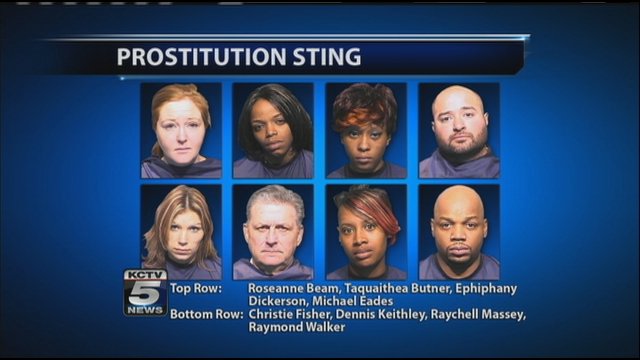
OVERLAND PARK, KS (KCTV) - A prostitution sting in Johnson County netted 15 arrests, and police say social media has become the new street corner.

Overland Park police arrested seven people for prostitution, seven people for patronizing prostitutes and one for promoting prostitution during a several day sting last week.

"It's a matter of us being in the right place at the right time to intercept the activity," said Capt. James Olney with the Overland Park Police Department. "It was a successful operation."  And social media is making one of the world's oldest professions that much more accessible.  "Anyone can post ads and pictures and anyone can access it, so your audience is quite expanded," said Olney.

In addition, more and more police are seeing prostitutes who are just passing through able to find their next job, not by standing on a street corner but just by logging onto the computer.  Police say Overland Park is attractive because of its easy highway access.  In this latest sting, two of the woman were from Oklahoma and one was from as far away as Pennsylvania.  "Prostitutes are going to have several jobs lined up. That is their job," said Olney.  But whether it is the online or the old fashioned way of hooking up, Overland Park police say these stings will continue, as will the arrests.

"I don't know what passes through their mind, but it is quite a shock when they see police there.  They are very surprised," said Olney.